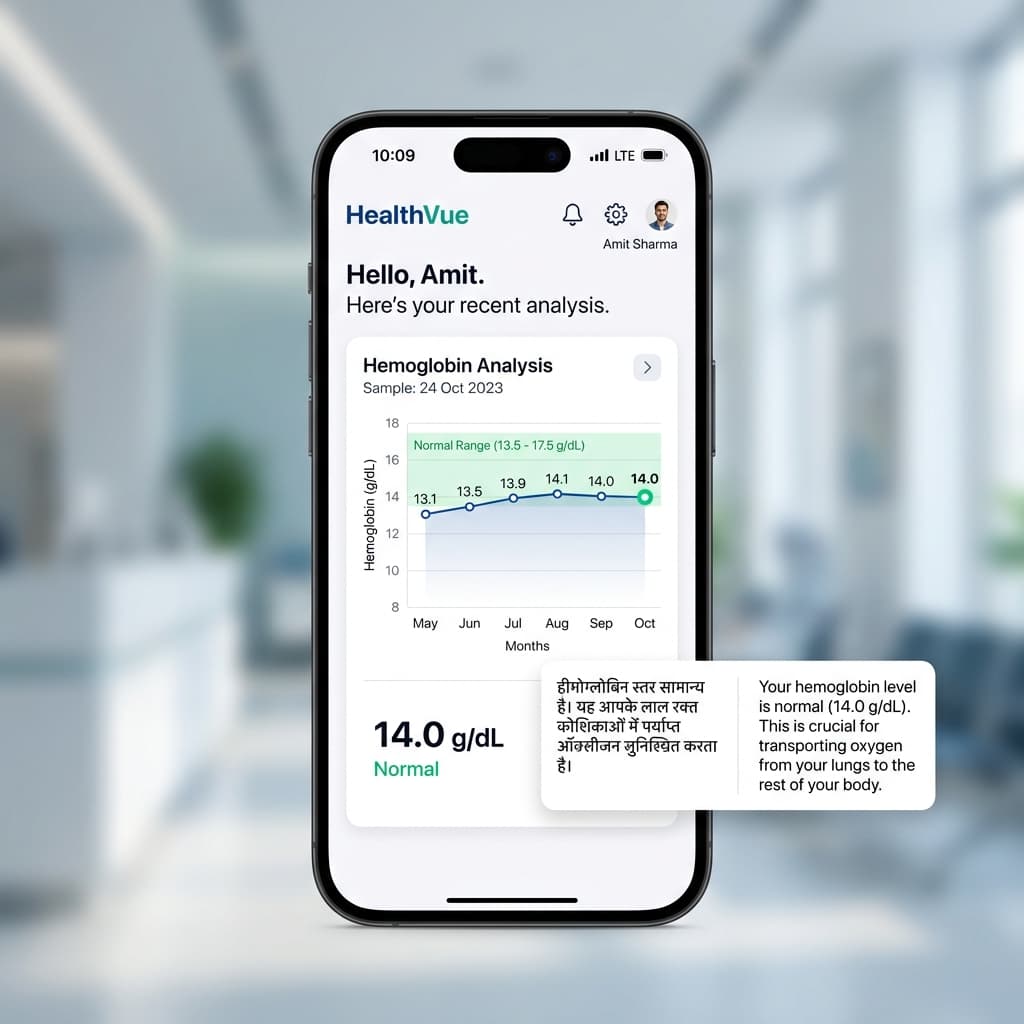
Getting a blood report can often feel like reading a foreign language. You see terms like "Hemoglobin," "MCV," or "TSH," followed by numbers that may or may not be in the "Normal Range." In 2026, you no longer need to wait for a doctor's appointment just to get the basics.
Why Medical Reports are So Confusing
Most diagnostic labs in India provide reports designed for doctors, not patients. They use heavy medical jargon that often creates "FOFO" (Fear of Finding Out). But your health data belongs to you, and you deserve to understand it clearly.
The 3 Things You Should Check First
- The Reference Range: Every lab has a different "Normal." Always look at the bracketed numbers next to your result.
- Abnormal Flags: Look for words like "High," "Low," or values in bold.
- The Context: A low Vitamin D level is common in cities like Indore or Pune, but it needs a specific plan to fix.
Managing these records properly is easier when they are organized. Check out our guide on why you need a Digital Health Vault to keep everything secure.
How SaralReport Helps
With SaralReport, you can simply upload your CBC or Thyroid report. Our AI doesn't just read the numbers; it explains them in simple Hindi and English. It turns "Microcytic Anemia" into "Your iron levels are a bit low, here is what that means for your energy."
Ready to simplify your health?
Upload your first report for free and get instant clarity today.
Upload Your First Report for Free