The thyroid gland is a small, butterfly-shaped gland located in the neck. Despite its tiny size, it regulates your body’s metabolism, weight, energy, and body temperature. Small changes in hormone levels can significantly affect your weight and daily energy levels.
If you have been feeling unexplained weight loss, weight gain, excessive exhaustion, or cold intolerance, understanding your Thyroid Profile (T3, T4, TSH) is the essential starting point.
What is the Thyroid Gland?
The thyroid gland creates two primary hormones: Triiodothyronine (T3) and Thyroxine (T4). These hormones travel through your bloodstream, dictating how your cells utilize energy. When the thyroid produces too little or too many hormones, it alters your system’s balance, causing either Hypothyroidism (underactive) or Hyperthyroidism (overactive).
Understanding TSH Levels
TSH (Thyroid Stimulating Hormone) is created by your brain's pituitary gland. It acts like a manager, telling your thyroid to produce more T3 and T4:
- High TSH: Usually means your thyroid is underactive (Hypothyroidism). Your brain is shouting at the thyroid gland to work harder because T3/T4 are low. Common symptoms include unexplained weight gain, severe fatigue, dry skin, and hair loss.
- Low TSH: Typically means your thyroid is overactive (Hyperthyroidism). Your brain has stopped requesting hormones because thyroid levels are already too high. Symptoms include rapid weight loss, rapid heartbeat, hand tremors, and feeling overly warm.
Managing Your Thyroid Health
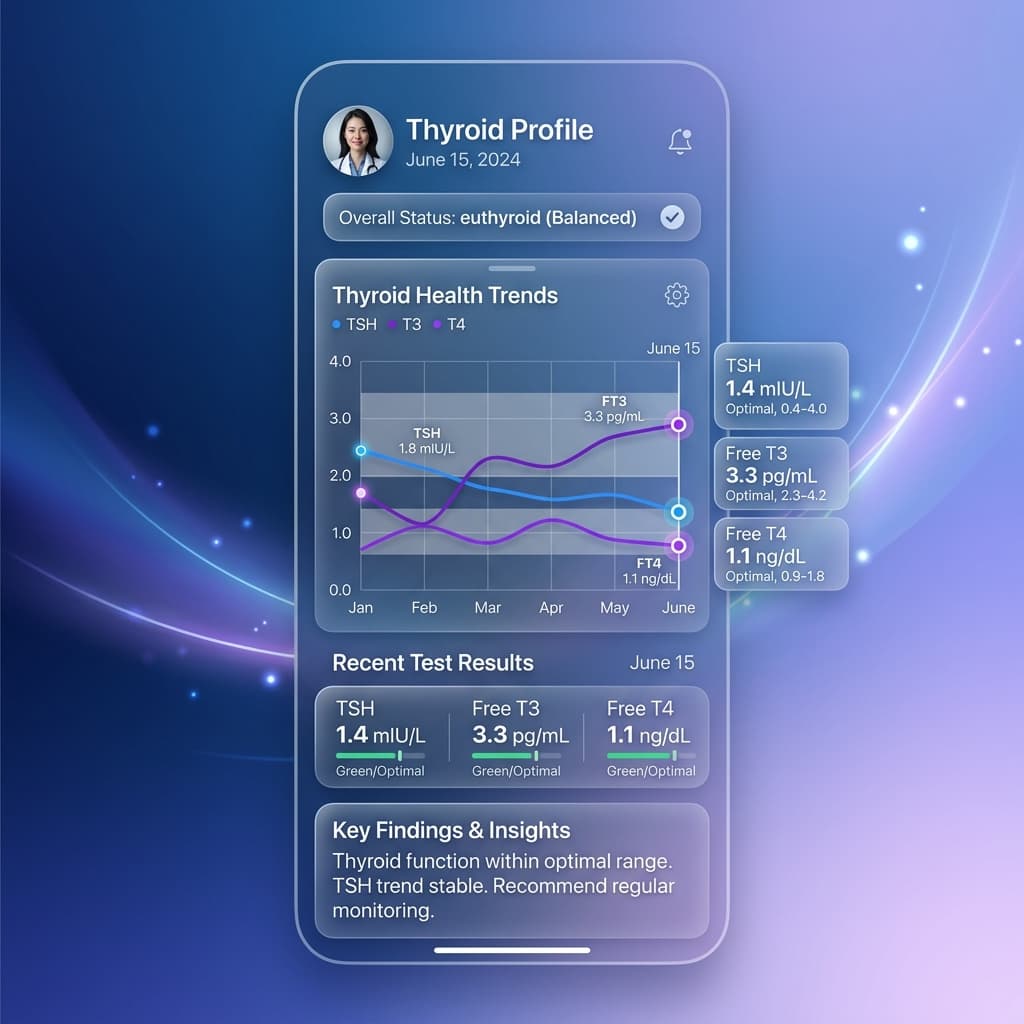
Regular checkups are essential. Small dietary changes, including incorporating iodized salt, trace minerals, and regular exercise, can work alongside prescribed medications to keep your hormones in balance. Using SaralReport's dashboard allows you to map your monthly TSH counts, showing whether your therapy is keeping your endocrine levels stabilized.
Keep a Close Track of Your TSH Trends
Create a trend graph of your thyroid profile results. Get instant clarity on how T3, T4, and TSH markers behave over time using our visual tools.
Analyze Your Thyroid Test