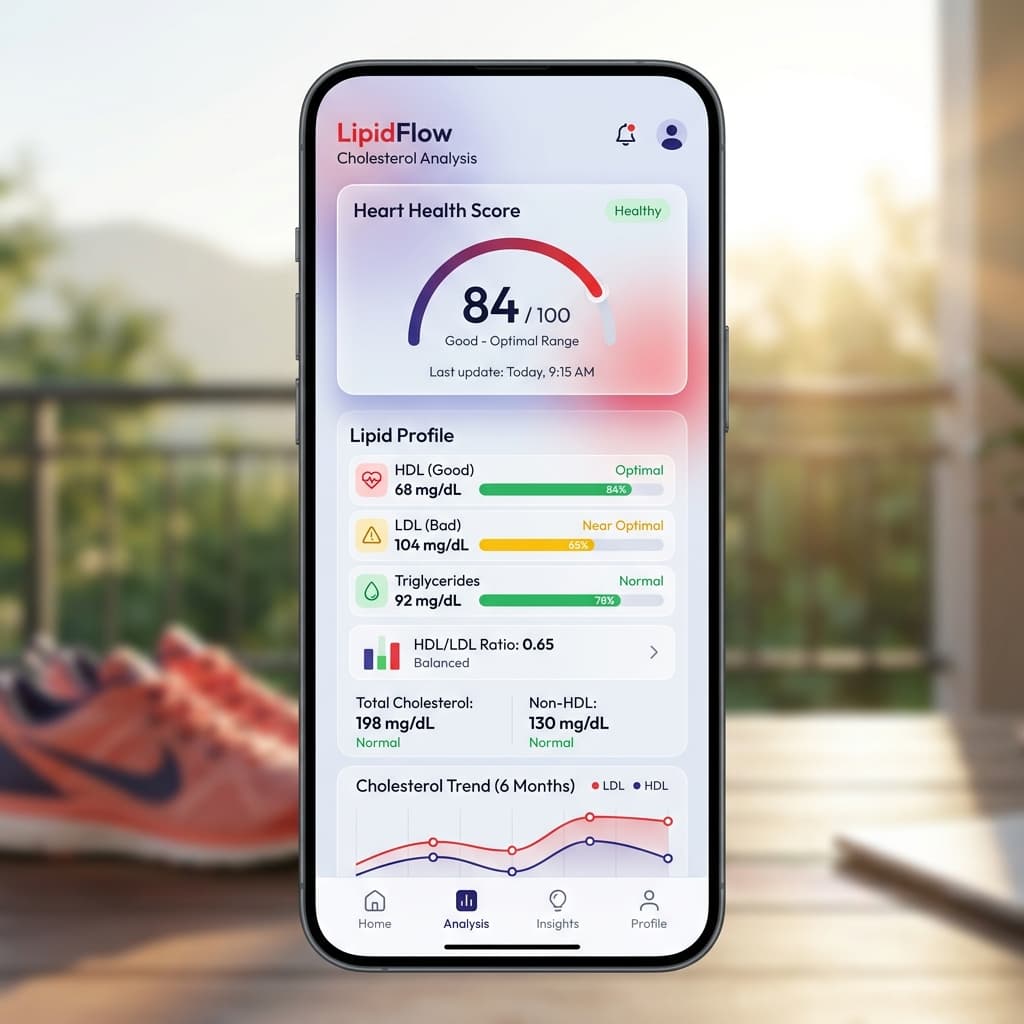
Cholesterol is a waxy, fat-like substance found in your blood cells. While your body needs cholesterol to build healthy cells and create hormones, having too much of the wrong kind can increase your risk of heart complications.
In India, where diets are often rich in saturated fats and refined oils, understanding your lipid panel is essential for maintaining arterial longevity.
What is Cholesterol?
Your liver produces all the cholesterol your body naturally requires. The rest enters your system through animal-based foods like meat, poultry, dairy products, and processed foods. Because cholesterol doesn't mix with blood, it travels wrapped in packages called Lipoproteins. When these levels build up, they create hard plaques inside your blood vessels, leading to restricted circulation.
HDL (Good) vs LDL (Bad)
When you look at your Lipid Profile test report, you will see two primary classifications:
- LDL (Low-Density Lipoprotein): The "Bad" cholesterol. It deposits cholesterol onto the walls of your blood vessels. High levels lead to blockages and cardiac complications. Keep this number low.
- HDL (High-Density Lipoprotein): The "Good" cholesterol. It acts as a garbage collector, gathering excess bad cholesterol from your arteries and returning it to the liver to be broken down and removed. Keep this number high.
- Triglycerides: Another form of fat in your blood. Elevated levels often arise from consuming excess carbohydrates, sugars, or alcohol, which directly increases cardiovascular risks.
Protecting Your Heart
Managing cholesterol is highly achievable through daily choices. Transition from refined oils to heart-healthy fats (like cold-pressed olive or mustard oil), cut down on sugars, consume high-fiber foods (like oats, lentils, and fresh green vegetables), and exercise at least 30 minutes daily. Monitoring your lipid trends regularly with SaralReport allows you to evaluate if diet adjustments are effectively clearing your blood vessels.
Check Your Lipid Profile Trend
Upload your cholesterol or lipid report. We will display a clear comparison of your HDL, LDL, and Triglycerides levels, highlighting your cardiac health markers.
Analyze Lipid Profile